From Fields to Intelligence:
Why FildraAI Exists
Modern AI is advancing rapidly — yet the farmers who grow the world's food still lack access to trustworthy, localized agricultural intelligence. This is the gap FildraAI was built to close.
The Problem
Agriculture Is Not a Low-Stakes Industry
A single disease outbreak can threaten a family's entire livelihood. An incorrect treatment recommendation can damage crops, soil, and ecosystems for seasons to come.
Yet many digital agricultural tools are built far from the realities of the fields they aim to serve. They are developed without local context, tested without local conditions, and deployed without regard for the complexity of local agricultural systems.
In agriculture, these gaps are not just technical problems — they are matters of trust. And trust, once broken in a farmer's field, is very hard to rebuild.
Generic AI systems often provide advice that ignores local regulations, regional product availability, environmental context — and offers no explanation for how a decision was reached.
A Journey Across Two Agricultural Worlds
Raised in Zambia. Shaped by Taiwan.
FildraAI's founding story spans two very different agricultural environments — each contributing something essential to what the platform became.
Zambia · Southern Province
Where the Mission Was Born
Founder Chiuzu Chilumbu was raised in Zambia, where maize is not just a crop — it is a cornerstone of food security and daily life. Farmers across many regions still rely on manual inspection to detect crop diseases. While this knowledge is invaluable, diagnosing disease across large fields or at early growth stages is an extraordinary challenge that AI can meaningfully support.
Taiwan · Agricultural Region
Where the Technology Was Forged
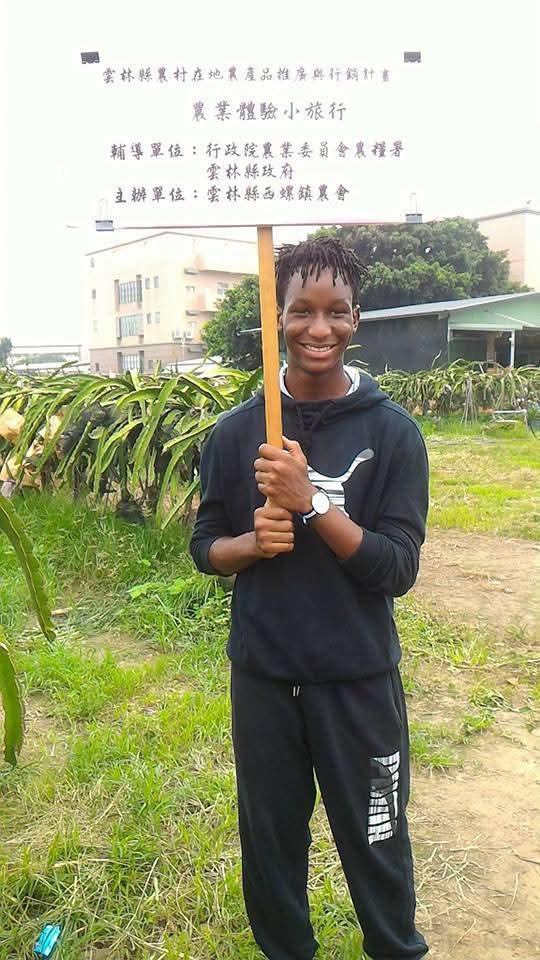
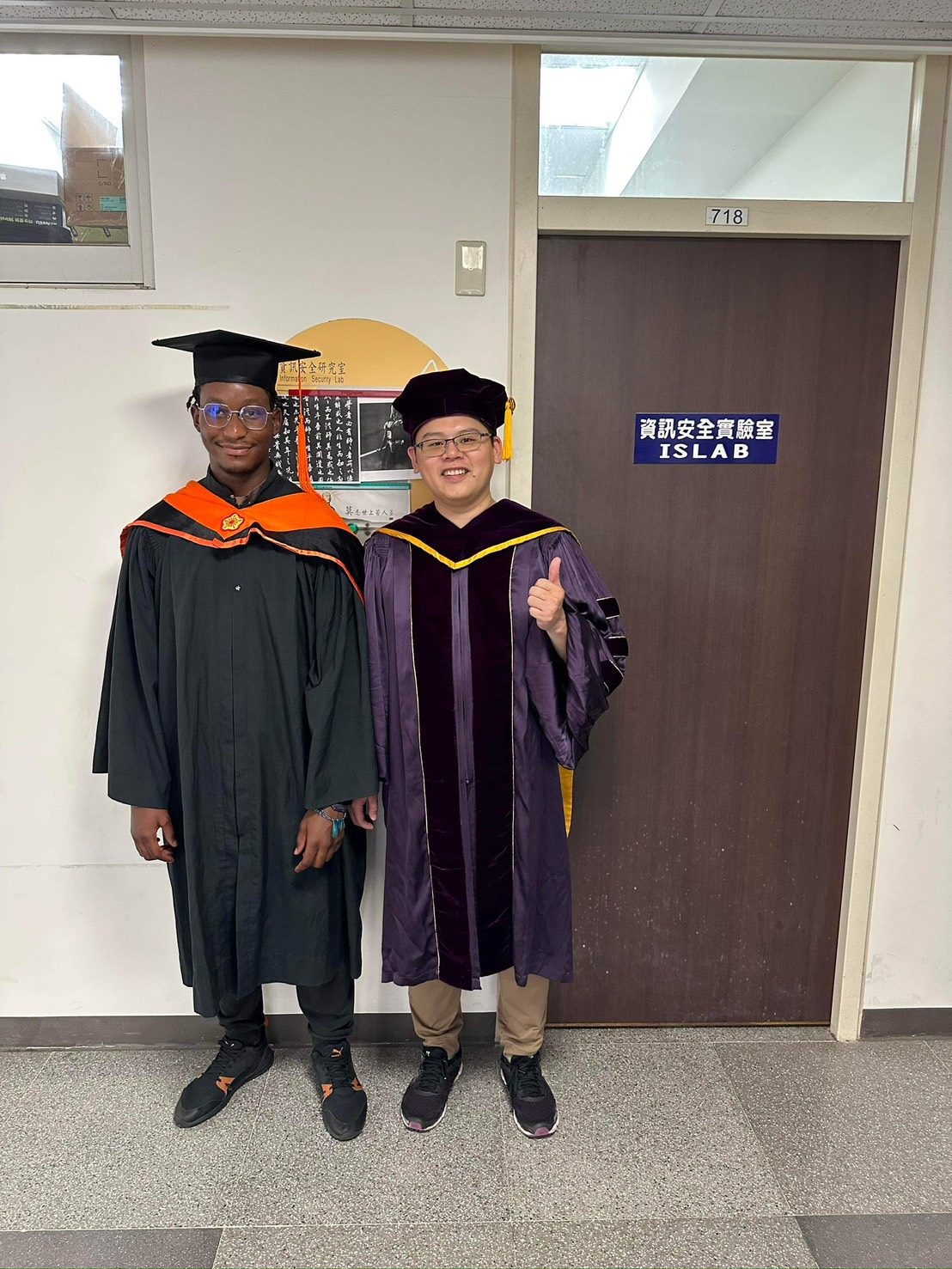
During his undergraduate years at Tunghai University, Chiuzu worked on the university farm and visited Yunlin — one of Taiwan's most productive agricultural regions — gaining firsthand exposure to precision farming. He then pursued a master's degree in AI and computer vision at National Tsing Hua University, where deep learning research gave shape to the vision behind FildraAI.
The Founder
Chiuzu Chilumbu
After his undergraduate years at Tunghai University, where time on the university farm and visits to Yunlin's agricultural regions deepened his interest in food systems, Chiuzu pursued a master's degree in artificial intelligence and computer vision at National Tsing Hua University (NTHU).
It was this combination — a farmer's perspective rooted in Africa and a researcher's toolkit sharpened in Taiwan — that gave rise to the core philosophy of FildraAI: that agricultural AI must be both technically rigorous and deeply contextual.
In the Ngoni tribe of Zambia, the name Chiuzu means "grass" — a fitting reminder that agriculture begins with the most fundamental elements of life: soil, plants, and the communities that depend on them.
Field Validation Work
"Utilizing a DenseSwin Transformer Model for the Classification of Maize Plant Pathology in Early and Late Growth Stages: A Case Study of Its Utilization Among Zambian Farmers"
IEEE PublicationA hybrid model combining densely-connected convolutional blocks with a shifted-window transformer attention mechanism, designed to detect subtle disease patterns at both early and later infection stages.
The Research
The Thesis That Sparked the Vision
Chiuzu's master's research explored a direct question: could deep learning meaningfully improve how Zambian farmers detect crop disease in maize — the country's most critical staple crop?
The research introduced DenseSwin, a novel architecture that fused the spatial detail-capture of dense convolutional networks with the long-range pattern recognition of transformer models. The result was a system capable of identifying disease symptoms at both early and late growth stages — an especially critical distinction for farmers who need to act before visible damage spreads.
Through rigorous experimentation, the model achieved 97.18% accuracy in maize disease classification — results that demonstrated AI could be a genuinely useful diagnostic partner for farmers in real field conditions.
But the research also revealed something equally important — a truth that would define the entire direction of FildraAI.
Beyond Accuracy
Every Field Has a Context. Every Farmer Has a Reality.
Agricultural decisions do not happen in isolation. A farmer's field is shaped by an intricate web of regional, regulatory, and cultural factors that generic AI systems routinely ignore.
Many existing digital tools provide recommendations without verifying whether suggested treatments are available locally, legally permitted, or safe under local agricultural regulations. They don't account for Pre-Harvest Intervals or Re-Entry Intervals. They have no concept of district-level climate variation.
And most critically: they operate as transparent AI — offering predictions with no explanation of how the decision was reached.
In agriculture, where livelihoods and ecosystems are at stake, this lack of transparency can undermine trust. A farmer who cannot understand why an AI recommended a particular treatment cannot make an informed decision — and may rightfully choose to ignore the advice entirely.
What Generic AI Misses
A farmer's field is shaped by far more than just the crop
What We Built
Agricultural Intelligence, Not Just AI
FildraAI was founded to move beyond isolated machine learning models toward a broader vision: agricultural intelligence that is accountable, explainable, and grounded in local context. Rather than replacing agronomists or extension services, our goal is to augment human expertise and support better-informed decisions in the field.
Computer Vision
Crop disease detection with AI focus area explanations — the AI shows exactly what it sees.
Knowledge Bases
Structured, country-specific agricultural knowledge with citations to peer-reviewed sources.
Safety Validation
Built-in PHI/REI compliance calculations, regulatory checks, and local product verification.
Geospatial Intelligence
District and province-level localization for every recommendation — because geography matters.
Multilingual Systems
English, Chinese, Kiswahili, and French — built so language is never a barrier to safe decisions.
Explainability
Every AI output is transparent — not just "what" but "why," so farmers can make truly informed choices.
A Cross-Regional Approach
Bridging Advanced Research with Real-World Agriculture
Today, FildraAI operates across two complementary environments. This dual perspective ensures that our systems are not built in isolation — but developed with continuous feedback from the communities they aim to support.
Taiwan · Research & Development
Technology Ecosystem
Our R&D work is rooted in Taiwan's strong technological ecosystem — combining academic research foundations with access to cutting-edge machine learning infrastructure, enabling rapid experimentation and model development.
Zambia · Field Validation Operations
Real-World Grounding
Our field validation work focuses on agricultural regions in Africa — ensuring our systems are not just theoretically sound, but practically trusted. Real farmers. Real fields. Real feedback that shapes every iteration of the platform.
Intelligence That Must Be Earned
FildraAI is entering its Field Validation Phase — continuously refining our systems through real-world use and collaboration with farmers, researchers, and agricultural institutions. We believe trust in agricultural AI is not declared. It is earned.